‘Monkey’s Magic Merry Go Round’ Review: Childhood Nostalgia Meets Psychological Horror
Monkey’s Magic Merry Go Round is the latest in a lineup of independent horror films within the sub genre of analog horror, which have seen a predominant resurgence over the past decade. Films like Late Night with the Devil (2024) and Skinamarink (2022) utilize experimental techniques mixed with analog elements and found footage to tell unsettling stories to the audience. What sets analog horror films apart from all the other sub-genres of horror is how distorted audio and retro broadcast aesthetics are used to bring the story to life.
Late Night with the Devil (2024) is a prime example of this, introducing audiences to a faux broadcast concept of an unaired episode of a 1970s talk show where an actual demonic possession was filmed in front of a live studio audience. Now, Monkey’s Magic Merry Go Round not only reinforces the idea of a faux broadcast in another unique manner, but it also delves deep into the heart of childhood nostalgia and calls into mind all of our memories of watching late-night broadcasts of our favorite children’s television shows.
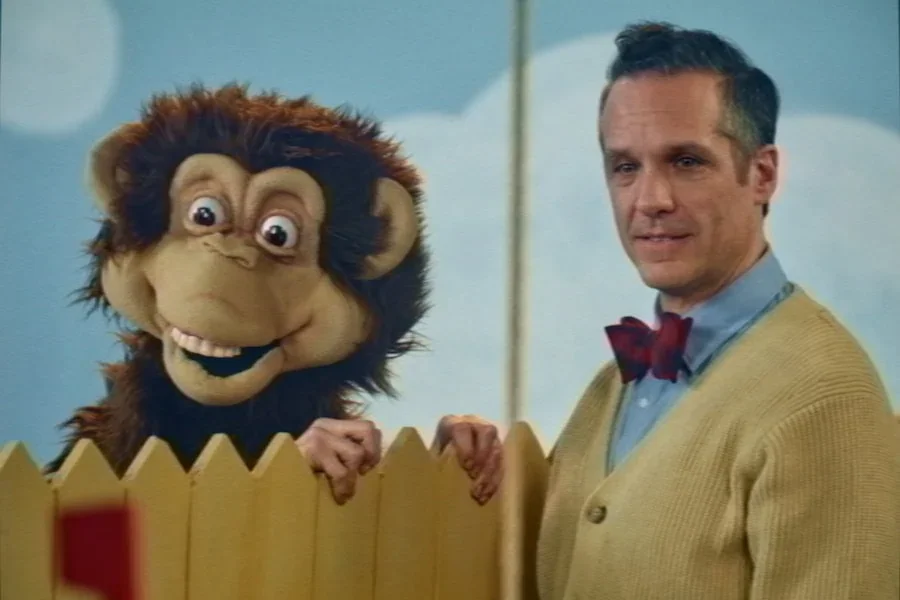
Directed by Aidan Leary and produced by Joe Swanberg from a script by Leary and C.R. Thompson, the film begins as though we are at first watching a colorful episode of Sesame Street or Mr. Rogers through the eyes of the TV show’s host, James (Michael Gilio). The atmosphere is imbued with all the aspects that make up popular children’s shows, including cheerful songs and the puppet co-stars that interact with him throughout the broadcast. However, we see a darker shift in tone as the film progresses, and what is originally thought to be a show that is to be enjoyed by children of all ages transitions into an unnerving psychological nightmare.
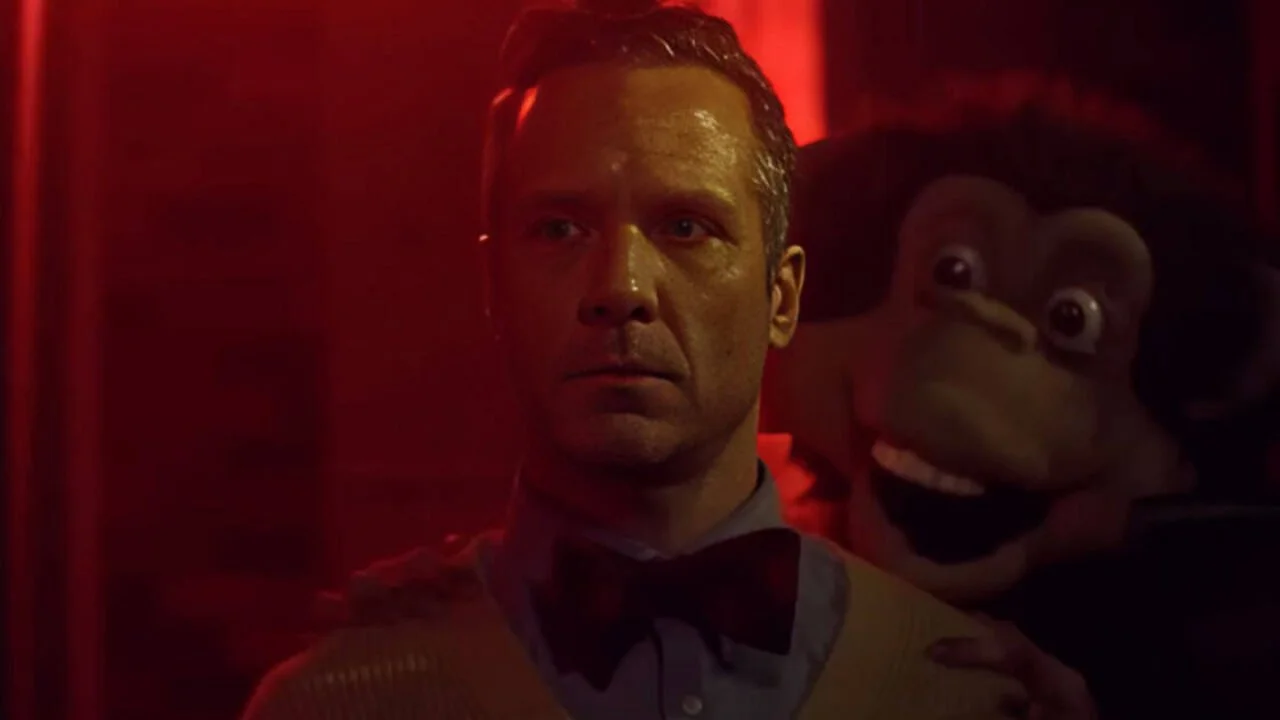
James begins to suffer from a severe bout of amnesia and begins to question his reality, all while his puppet co-stars begin to act increasingly sinister. After conferring with the puppets about his sudden memory loss, they attribute what he has been experiencing to an ambiguous creature known only as “The Freak.” As everyone tries to come to terms with the origins of this creature and its identity, we see the puppets suddenly become accusatory, which profoundly narrows the line between fantasy and reality for us as the audience who is trying to determine where the film is progressing in terms of direction and narrative.
When James uncovers the truth about his amnesia, he is left to confront personal trauma and must outrun his past while trying to come to terms with the sudden violent actions of the playful puppets on set who he originally thought were his trusted friends.
The film is particularly effective for one of two reasons: first, because we as an audience are attempting to decipher why James has become so confused. As the film unravels, though, we are also left wondering what is real and what is staged due to this confusion. This leads to an inherent lack of trust that applies not just to James and his puppet friends, but also to mysterious characters that get introduced later on like the post lady (Jordan Olivia Mershon). From the moment that viewers are introduced to her, it is apparent that her appearance along with the mannerisms that she displays seem oddly familiar to James, but we instinctively begin to suspect that she may be a threat too.
Along the way, we come to realize that the environment that James has found himself in may in fact be a distraction away from his own childhood memories, and that the fictional characters he is encountering on screen may not be so fictional in this reality after all. Leary strongly hints at this through flashbacks that James begins to experience, as it is implied that what should have been an early life interspersed with a feeling of joy and youthfulness became displaced by tragedy and grief.
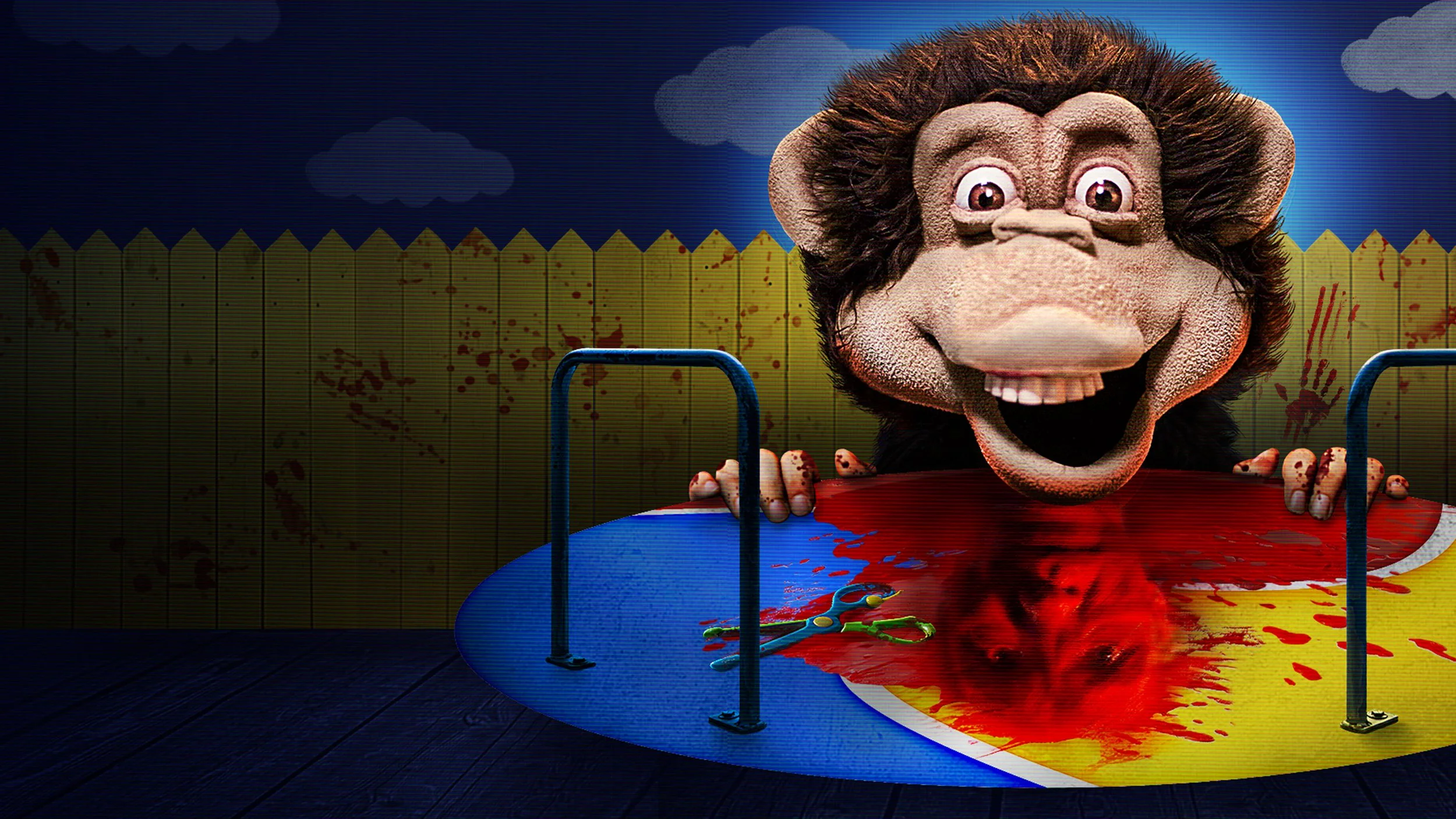
Second, we as viewers can all relate to “escaping” into our favorite television shows growing up, and the elements of childhood nostalgia can become blended quite well with other genres such as psychological horror if utilized properly. It was in this instance that the horror managed to deliver, as it often emerged out of nowhere with little to no warning as to what was about to unfold. The fact that this is all taking place on what should be a children’s television show is also crucial for the effectiveness of some of the film’s more shocking scenes because when they do arrive, they are delivered with full force and intensity in a way that is truly unexpected.
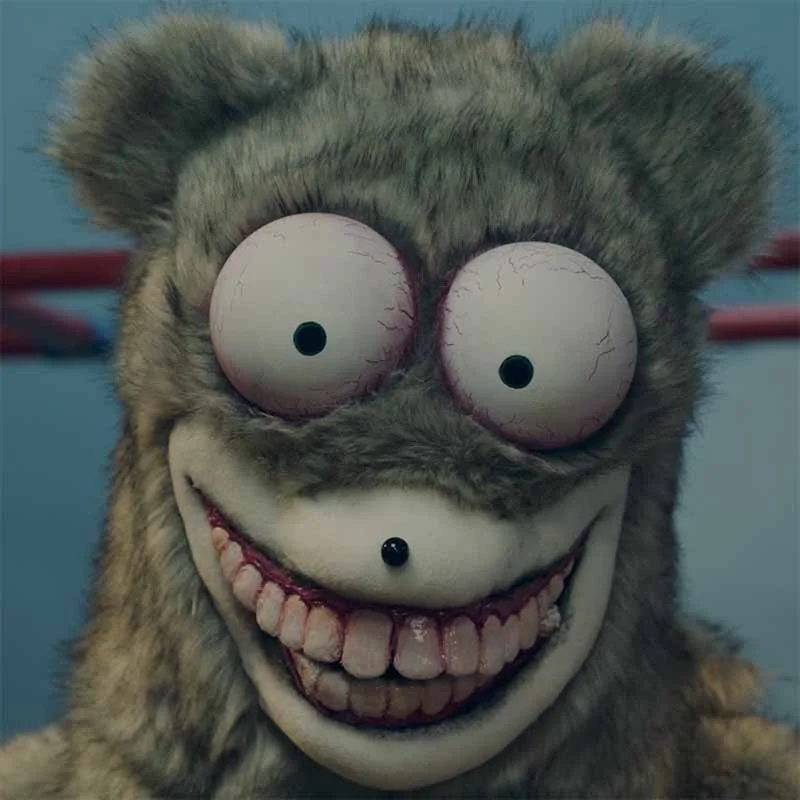
Through a majority of the first act, we are led to believe that nothing could possibly happen to reduce the sense of nostalgia that we are feeling, but we are later proven to be wrong. The moments that unfold during the film’s second and third acts are at first reminiscent of scenes that were placed into the film for shock value, but if the viewer were to carefully analyze the context, they are left with the realization that all of them serve a crucial purpose towards the narrative.
All of the shock that emerges later on manages to balance out the pacing of the film quite well, even if the earlier acts are inconsistent with tension. Though the horror is literal, it is also largely metaphorical, and that is exactly why the film works even if we expect it not to.
In the end, the film shifts from a tone of darkness to a finale that is cathartic for both James and the viewer. Monkey’s Magic Merry Go Round delivers a special horror experience on Screambox for the inner child inside all of us, calling to mind our own memories of what it was like getting up early in the morning to watch our favorite television shows, while showing that traditional genre tropes can feel like something we have never seen before when we are exposed to new and unusual ways of storytelling in the horror genre.